

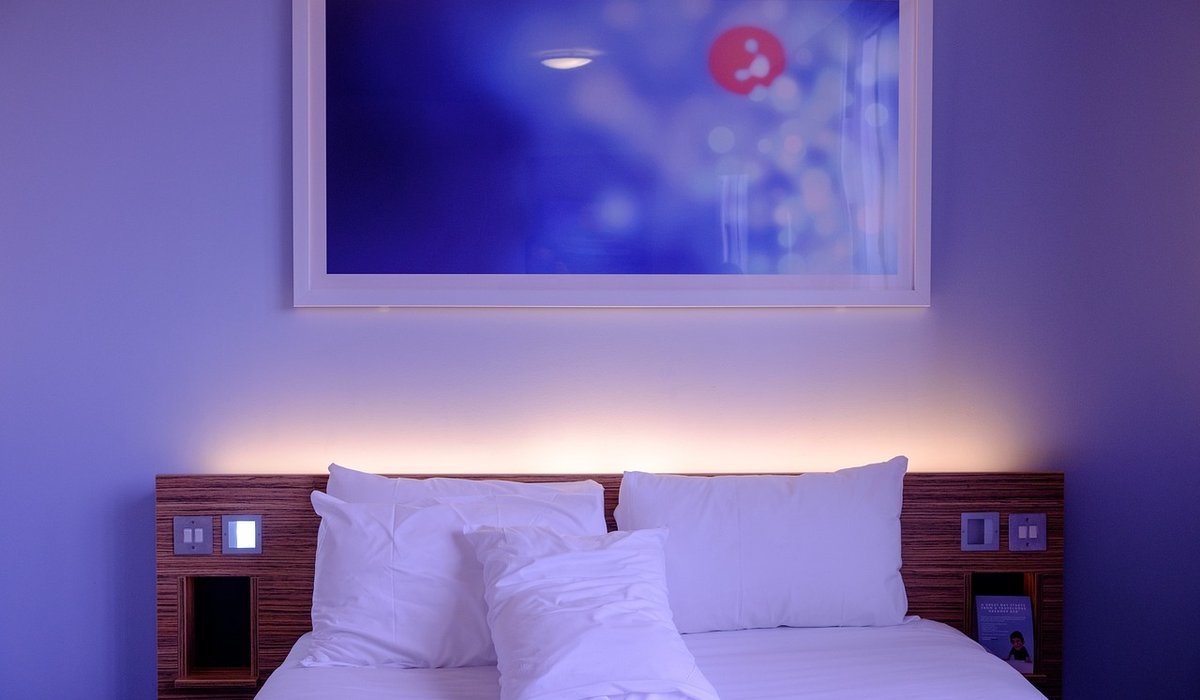
There is no official definition, and no trade body polices the word. In practice, a boutique hotel in the UK is usually an independent property of roughly 8 to 40 rooms, often in a converted Georgian townhouse, Victorian villa, former mill, old pub or city-centre warehouse. The owners tend to be involved day to day, the design is deliberate rather than corporate, and the experience is meant to feel local rather than generic. That is the appeal — but it is also why two hotels with identical price tags can feel completely different. Treat "boutique" as a starting point for your own questions, not a promise.
Expect colour, texture and personality: reclaimed floorboards, statement wallpaper, mid-century armchairs, original fireplaces, artwork by local makers, a bar cart in the corner. Rooms are frequently named rather than numbered, and no two are quite alike.
The trade-off is that character often comes with quirks. Lighting may be atmospheric but dim. Storage might be a rail and two hooks rather than a wardrobe. Plug sockets can end up behind the bed or across the room from the mirror. In older buildings, floors creak, windows are single-glazed, and the plumbing has opinions. None of that is a fault — it is simply what you are buying into, and it is worth deciding in advance whether you find it charming or annoying.
This is where boutique stays usually win. Staff are more likely to remember your name, recommend the bakery two streets away, and sort out a taxi or a table without a script. Breakfast might be cooked to order by the owner. The person who checks you in may also mix your evening drink.
What you should not assume is 24-hour cover. Many smaller properties run reception from, say, 7am to 10pm only, and operate a self check-in or key-safe system outside those hours. A few practical questions to ask before booking:
With a chain, a "standard double" is a fairly predictable product. With a boutique hotel, the cheapest room might be a compact attic space under the eaves, while the best room is a suite twice the size for a modest supplement. It pays to read the detail rather than the headline rate.
Breakfast is often the highlight — cooked to order, with local sausages, proper coffee and bread from a nearby bakery — but it usually runs to set times, perhaps 7.30am to 9.30am, rather than all morning. Some hotels include it, others charge separately, so check before you book.
An honesty bar is a classic boutique touch: help yourself, write it down, settle up at check-out. In-house restaurants, where they exist, are frequently small and may close on Sunday or Monday evenings. That is not a problem — it is an invitation to eat out, and staff recommendations are usually excellent. Ask them where they go on their night off.
Boutique hotels reward a little forward planning. Book directly where you can, then make contact with specific requests rather than vague hopes.
Go in expecting individuality rather than uniformity, ask the right questions beforehand, and a boutique stay will give you something a chain rarely can: a genuine sense of the place you are visiting, and of the people who live there.

Hamilton Hotel An honest, everyday look at the things that make life a little better — with advice you can actually use.

Hamilton Hotel Simple, genuine and looked after with care — the kind of place worth returning to.

Ask reception for market days, take a reusable bag and go early to find fresh produce, crafts and regional specialities before the crowds arrive.

Comments
ALina Kelian
19th May 2018 ReplyHamilton Hotel Simple, genuine and looked after with care — the kind of place worth returning to. ullamco laboris nisi ut aliquip ex ea commodo consequat.
Rlex Kelian
19th May 2018 ReplyHamilton Hotel Real stories, useful guides and the occasional recommendation, all in one calm corner of the web. ullamco laboris nisi ut aliquip commodo.
Roboto Alex
21th May 2018 ReplyHamilton Hotel Written for people who value the details, and want honest guidance they can trust. ullamco laboris nisi ut aliquip ex ea commodo consequat.